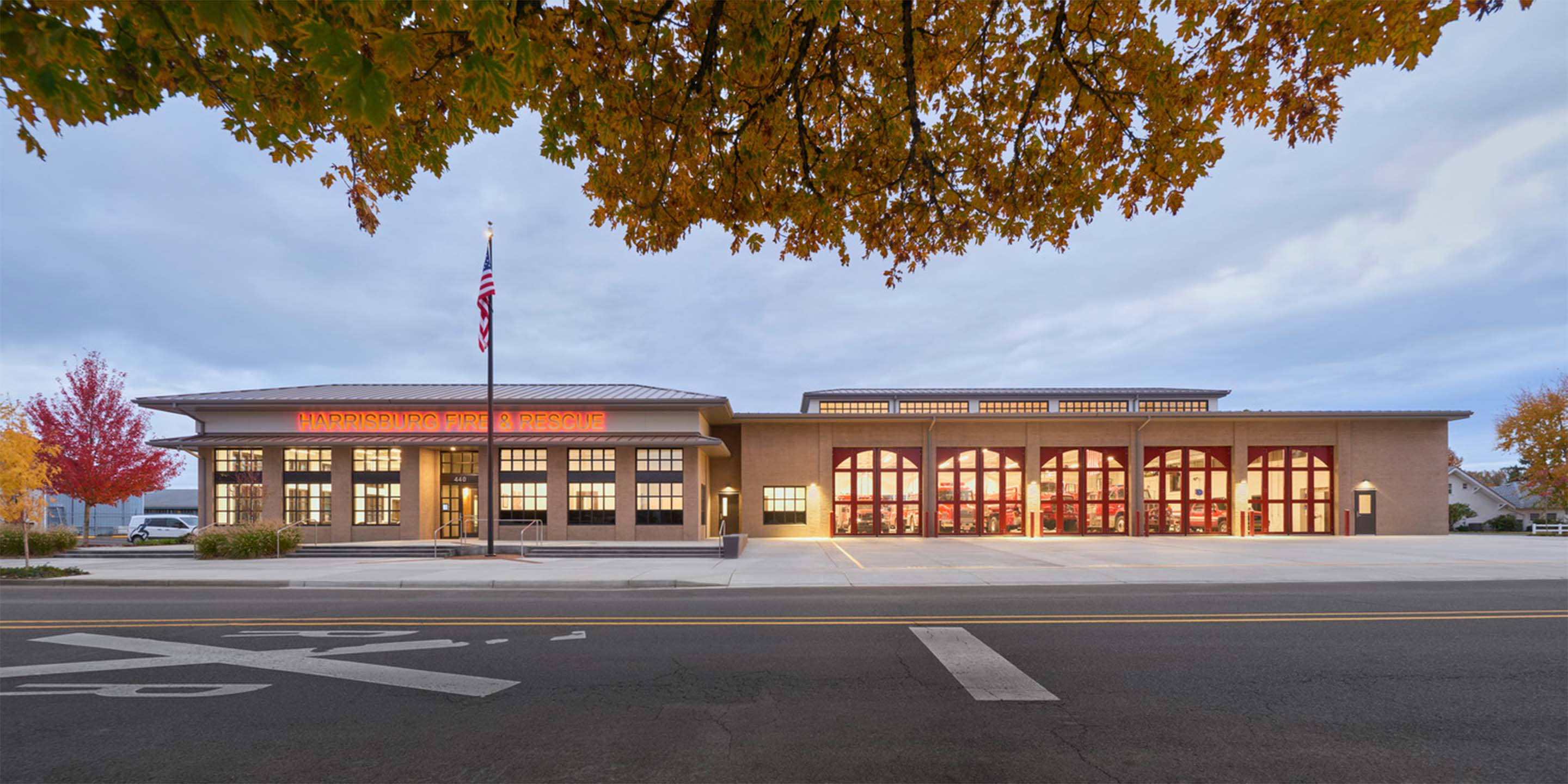
Fire Station Design with Jeff Humphreys
Firefighters rely on well-designed stations to do their essential, life-saving work. It’s no surprise that designers with deep experience designing these stations play an important role in supporting these heroes.
Architect Jeff Humphreys co-leads Mackenzie’s essential facilities design group, alongside Architect Brett Hanson.
Jeff has worked on more than 125 public safety facilities, including 75 fire stations. Many of these stations have won design awards and more importantly, won praise from the men and women who use them to protect their communities.
M: Judging entries to a fire station design contest is a pretty cool job. How’d you get it?
JH: Well, I designed my first fire station in 2000. I have been engaged with the Station Design Conference, which is focused on fire station design, as a regular participant. Eventually I started speaking and presenting on them as a fire station design subject matter expert.
Through this work I've developed some rapport with the organizers. They've come to appreciate the value that our Mackenzie team brings and that has culminated in them asking me earlier this year, “Hey, would you be interested in doing this?”
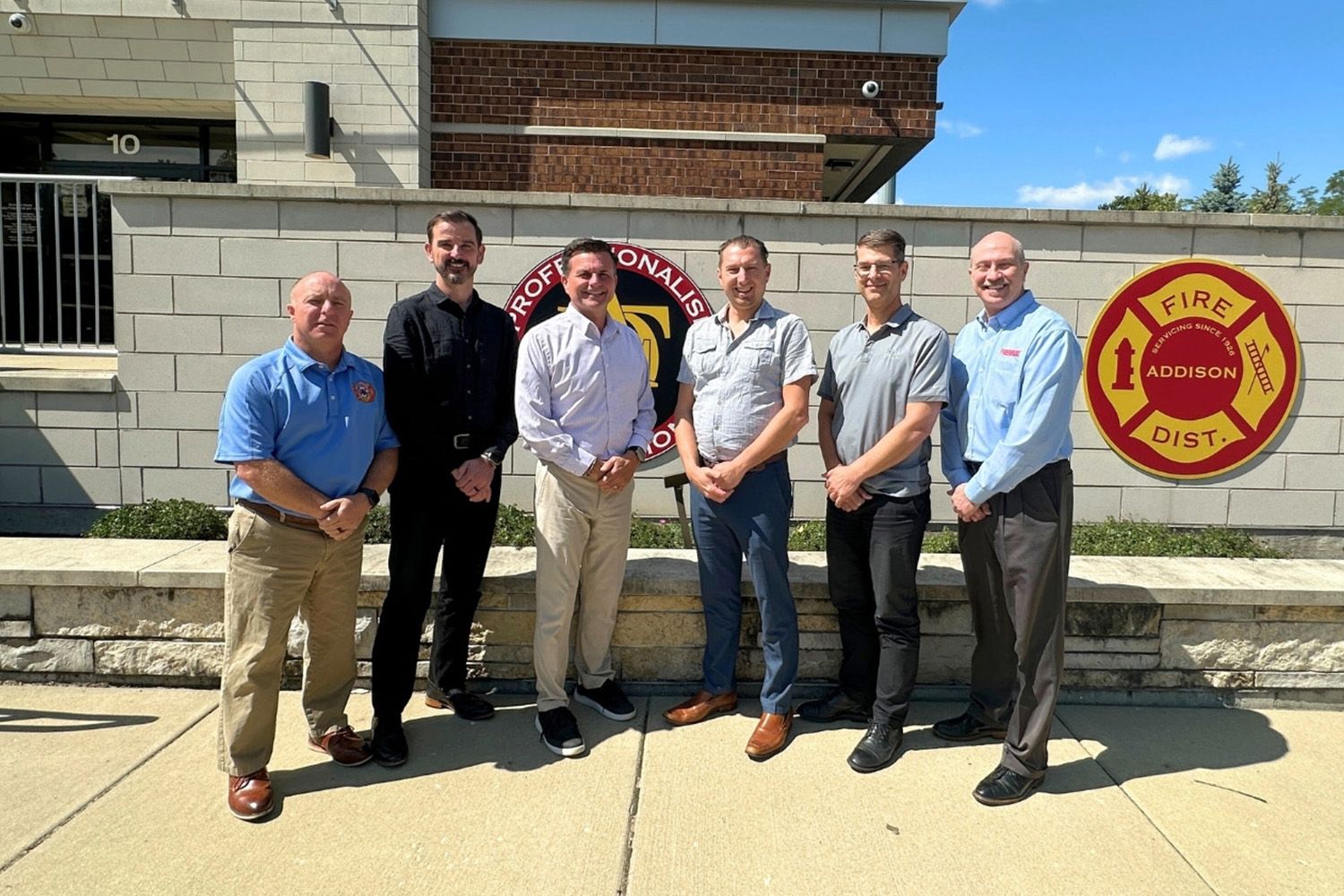
So, this summer I flew out to Chicago with my fellow judges and had the opportunity to look through a big portfolio of great new fire station projects. We got together to think deeply about what is truly working and supporting our first responders.
I do this work because I’m passionate about equipping our first responders with the best tools we can use to support their lifesaving work.

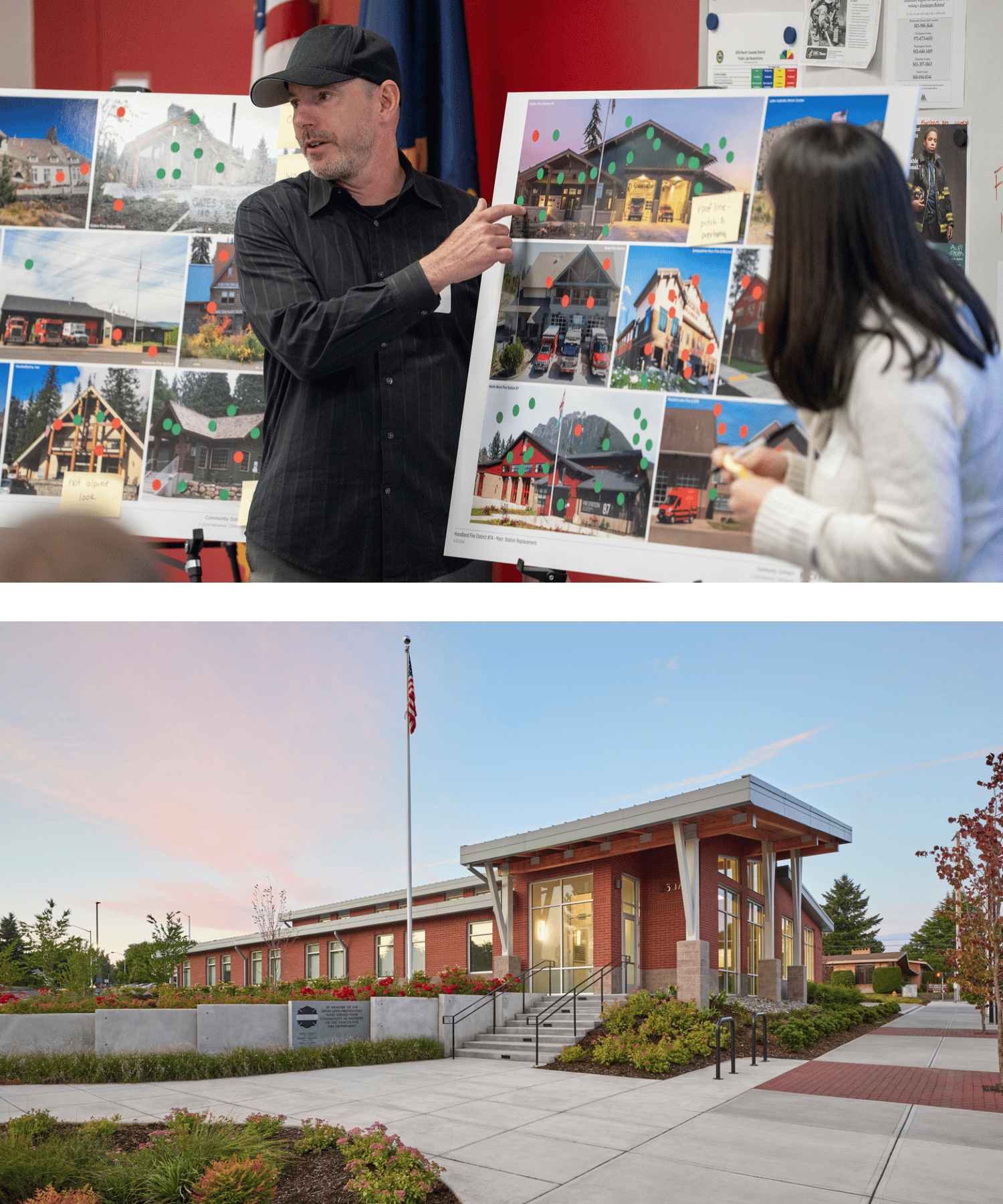
M: Public projects bring unique design challenges, what keeps you going through these challenges?
JH: The thing that makes me excited about these types of projects is they are important to the community. We're designing it for the client who's the fire district or the fire department, but they're serving the community. So it's really exciting to be working on a project that is going to add value to the community that it serves.
I've been doing public projects for 25 years. Prior to that, I did do some commercial and industrial work. The difference between work with a public client and a private client is private clients usually know what they want. They've done this before and they've selected you because of certain reasons, but they're basically going to dictate to you what they want and they're going to expect you to go to a certain speed.
The difference a lot of times with our fire district clients that we have is they've never done a fire station before, or the last time they did one was 20 years ago, and everyone that worked on it has retired and moved away. Often, we educate the client about the process we’ll have to go through. We explain, “Here's how we're going to go through every single aspect of the public process, so you get what you want and there's no surprises.”
We have a wonderful team here at Mackenzie. They're all excited about working with public entities and coaching them through the process and helping deliver a project that's going to resonate really well with them and the community they serve.
M: Can you tell us more about the judging panel you joined? What categories did you determine award winners for?
JH: The panel included seven of us. It was composed of fire chiefs and staff from fire districts and departments, as well as architects like me with a background in designing these stations.
There were eight categories:
- Career One
- Career Two
- Co-located
- Combination
- Satellite
- Renovation
- Training Facilities
- Volunteer
There were 67 entries across these eight categories and we each individually graded them according to the criteria that the Station Design Conference specified.
It took a lot of time that people donated to go through all of this. We got together and talked about the merits associated with it and evaluated the design decisions. We talked through specific aspects to make sure we felt comfortable with what the scoring was actually showing.
M: What criteria did the panel look at to make your decisions?
JH: We used ten criteria to evaluate each station:
- Operational Efficiency & Functionality
- Health & Wellness Design
- Safety & Decontamination Features
- Sustainability & Energy Efficiency
- Overall Architectural Design
- Innovation in Design & Technology Integration
- Adaptability & Future-Proofing
- Community Integration & Public Access
- Training & Specialized Regional Features
- Site Design, Vehicular Logistics & Urban Design
I personally think that what's important is creating a facility design that meets the operational requirements and the well-being of the occupants. That’s more important than the aesthetics of the project.
That starts on the outside of the building. How is the site laid out? Are pedestrian and civilian traffic separated out from staff parking and emergency vehicle circulations? That separation helps prevent injuries, accidents, or delays in the response to a call.
Another thing that has become very prevalent is that when firefighters and emergency responders come back from calls, they oftentimes will have a lot of contaminants on them, especially if it's a fire call. In addition, the apparatus (fire fighting vehicles) themselves are generally diesel fired, which means known carcinogens are in the exhaust fumes. So the apparatus bay is what we call a “dirty zone,” also known as a “red zone.” Good design practice would be to separate that zone out from the rest of the building and use airlocks, also known as mudrooms and vestibules.
This means there is a pressurized separation between the living quarters and the office areas that separates the dirty zone, in this case the apparatus bay, from the rest of the station.
This was another driver of evaluating the stations: Did they have this proper separation of zones?
In addition to that, we asked ourselves, how is the station laid out? Is there a good response flow? So when the emergency call comes in, how do staff actually make their way to the apparatus bay, get in the rig, and go out? is it easy for them to follow? Is it quick?
Usually when Mackenzie design stations, we look at the worst-case scenario. Oftentimes that is when the call comes in at 3 o'clock in the morning and you're in your bunk room. How quickly is it going to be for you to navigate from your bunk room to the apparatus bay?
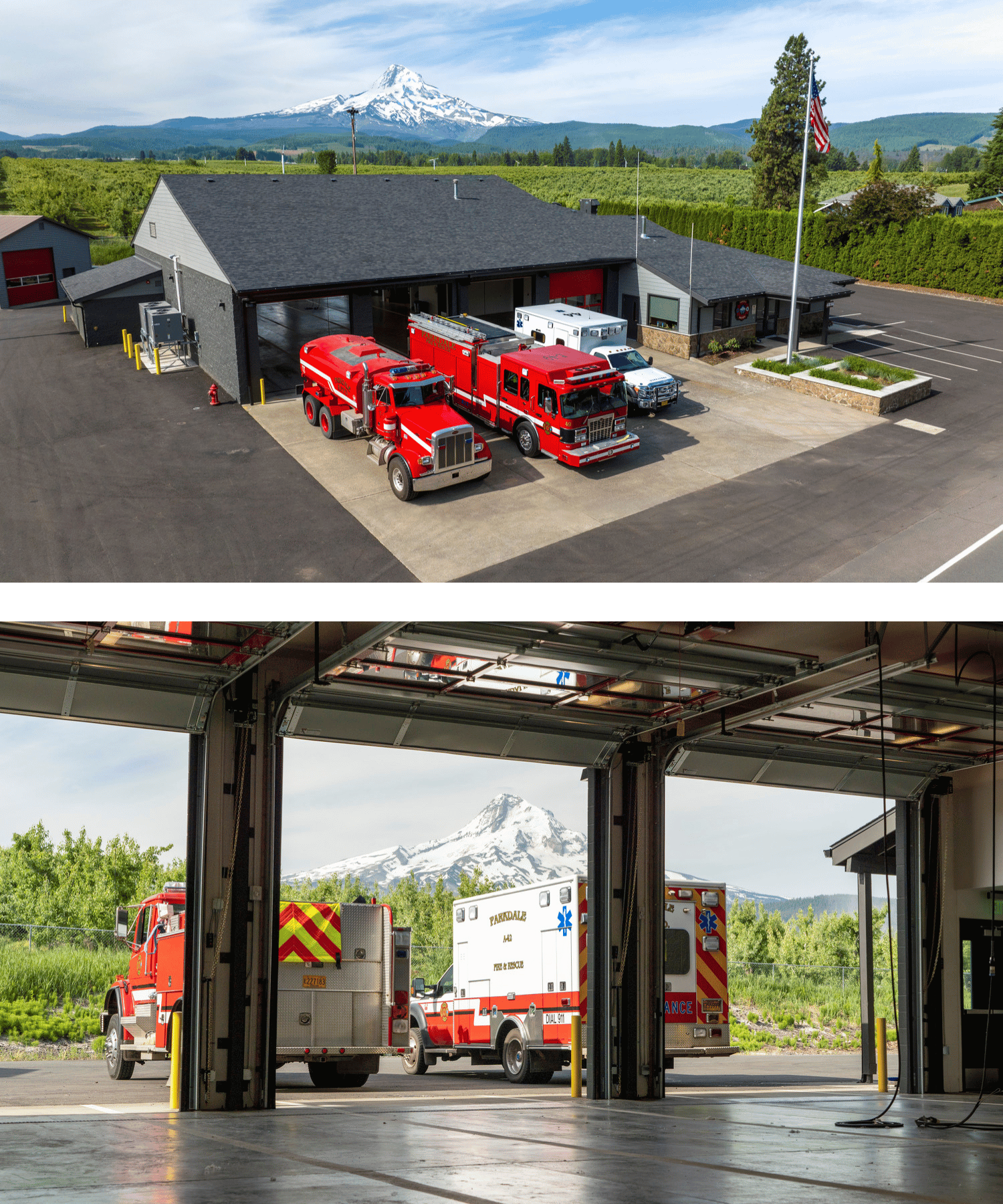
We interviewed Jeff about much more so look out for another portion of this interview soon. Read more about the Station Design Awards & Conference here.


